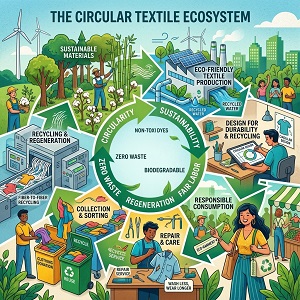

A new bill introduced in the US House of Representatives aims to designate the Environmental Protection Agency (EPA) as the lead federal authority in driving national efforts to curb textile waste, a crisis largely fueled by the fast fashion industry. The legislation, titled the Textile Waste Reduction Act (TWRA), was introduced by Representative Chellie Pingree. The bill directly addresses findings from a Government Accountability Office (GAO) report on fast fashion pollution, which estimated a more than 50 percent increase in US textile waste between 2000 and 2018.
Pingree emphasized that federal action is essential to tackle this escalating environmental challenge. She noted that textile waste has become one of the fastest-growing waste streams in the nation, making a coordinated federal approach necessary to build a more sustainable and circular textile economy.
Under the provisions of the TWRA, the EPA would be required to formulate a comprehensive National Textile Circularity Strategy and conduct a thorough needs assessment to identify required investments and policy priorities. The bill also mandates the creation of an Interagency Working Group on Textile Circularity, supported by a newly established advisory board.
To drive regional and community-level action, the EPA would also be responsible for identifying and publishing federal funding opportunities. These grants would support states, local governments, tribal authorities, and non-governmental organizations implementing textile circularity programs.
While the legislative path of the bill remains uncertain under varying political dynamics, its introduction underscores the growing pressure on the United States to advance its environmental regulations, particularly when compared to stricter frameworks already established in the European Union. Through coordinated strategy and targeted funding, the initiative seeks to transform a wasteful supply chain into an efficient and sustainable industry.