
Mango Fashion Group continues to accelerate its international retail footprint with the inauguration of a new flagship establishment in Edremit, Türkiye. This latest opening is far from a standalone development; it represents a core pillar of the company’s ongoing commitment to deepening its presence in one of its most vital global markets. Following a record-breaking 2025 that saw the firm reach €3.8 billion in revenue, the Spanish fashion giant is aggressively reinvesting in its physical store network to drive long-term growth.
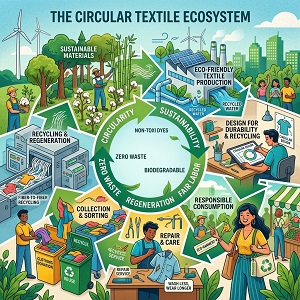
The global textile and apparel landscape is undergoing a massive structural shift as the European Union (EU) aggressively tightens its environmental regulations. Through sweeping new legal frameworks like the Ecodesign for Sustainable Products Regulation (ESPR), Digital Product Passports, and Extended Producer Responsibility (EPR), the EU is actively banning the destruction of unsold inventory to halt fast-fashion waste. Rather than feeling squeezed by these compliance hurdles, Turkiye—the EU’s third-largest apparel supplier, generating nearly $10 billion annually in garment exports—is strategically pivoting to establish itself as the new epicenter of Europe's circular fashion ecosystem.
The European textile and apparel industry is gearing up for a massive technological leap to secure its survival on the global stage. During the 20th Textile ETP Annual Conference in Amsterdam, the DigitX Innovation Hub officially unveiled its strategic blueprint titled "The Digital Transformation of the European Textile and Apparel Industry". Developed collaboratively by more than 100 industry experts over a six-month period, this roadmap underscores that digital transformation is no longer a mere option for efficiency, but an existential necessity if European manufacturing wants to avoid being completely wiped out.
Page 3 of 11