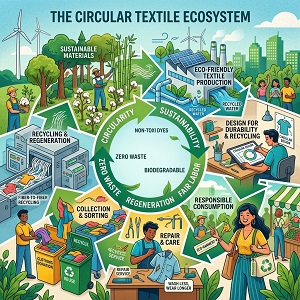

The fast fashion business model, which has long served as the driving force behind Europe’s clothing market, is currently facing its most significant challenge due to a combination of tightening regulatory oversight and shifting environmental consciousness among consumers. The European Union (EU) has taken decisive action through a wave of new legislation designed to curb textile waste, which currently estimates at over 12 million tonnes annually. These reforms include extended producer responsibility, where clothing brands are now mandated to fund the collection, sorting, and recycling of textiles. Furthermore, large companies are strictly prohibited from burning or discarding unsold apparel, fundamentally shifting the financial burden of waste management from governments to brands.
The Turkish apparel industry is currently facing a challenging turning point. According to data from the Istanbul Apparel Exporters’ Association (IHKIB), Turkey's total apparel exports reached approximately $6.61 billion from January to May 2026. While the headline figures may appear stable, a look at the January to April period shows exports at $5.32 billion, reflecting a 1.5 percent year-on-year decline. This phenomenon marks a significant shift for exporters who have historically relied heavily on geographical proximity to the European market.
As the European textile industry navigates a complex period of regulatory transformation and intensified global competitive pressure, the European Apparel and Textile Confederation (EURATEX) has officially re-elected Mario Jorge Machado as President. This decision reflects a strategy of leadership continuity, which is viewed as vital for the sector as it moves toward a new era of industrial policy. Under Machado’s mandate, EURATEX emphasizes that while the industry must prioritize decarbonization, it is equally essential to ensure this transition does not trigger widespread deindustrialization—a concern that has been exacerbated by rising energy costs and shifting international trade dynamics.
Page 2 of 11