
The athleisure industry is currently undergoing a significant paradigm shift as consumer lifestyles become increasingly dynamic. Stewart Milligan, a senior material scientist and textile consultant for Cotton USA, explains that the demand for versatile clothing capable of transitioning seamlessly from work and social settings to the gym is a primary driver of modern material innovation. Consumers are increasingly prioritizing high performance coupled with comfort, specifically seeking softness, ease of movement, breathability, and advanced temperature and moisture control.
In response to these demands, cotton has emerged as a strategically vital material. Its natural comfort, breathability, and softness make it highly suitable for the diverse end uses required in athleisure. Milligan notes that innovation is continuously advancing through the blending of cotton with other fibers to meet specific performance needs. For example, blending cotton with man-made cellulosic fibers like modal, lyocell, or viscose provides enhanced softness and drape, while integration with wool offers superior natural temperature regulation and odor control.
Technological advancements have also reached new heights with innovations such as "Supima Air," which utilizes hollow-core yarn technology to create fabric that is lighter, faster-drying, and highly effective at moisture management. Beyond material science, innovations in garment construction like 3D knitting are having a major impact. This technique allows for the creation of seamless, aesthetically clean garments that can integrate specific performance properties into targeted zones, while also reducing manufacturing fabric waste by up to 30 percent.
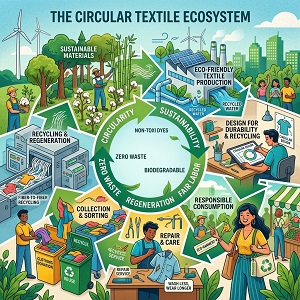
These trends are further accelerated by growing consumer awareness regarding the health and environmental impacts of materials worn directly against the skin. This has translated into strong momentum for natural fibers over synthetics. Although the use of recycled synthetic fibers like polyester and nylon continues to grow, a large portion of this content is derived from plastic bottles rather than textile-to-textile recycling. Given that textile-to-textile recycling remains limited in scale, natural fibers like cotton currently offer a more substantial sustainability advantage. Looking ahead, the industry is expected to continue focusing on environmentally responsible dyeing techniques and the development of inclusive, adaptable fits to meet evolving market needs.