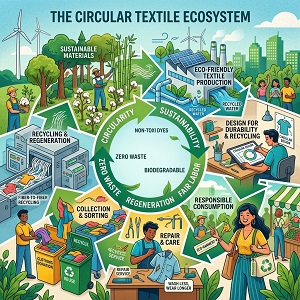

Global apparel brands and textile manufacturers are rapidly reengineering their procurement strategies, pivoting away from traditional commodity fibers toward high-tenacity, circular, and eco-certified materials. This structural realignment is heavily driven by stringent international regulatory frameworks, most notably the European Union’s Ecodesign for Sustainable Products Regulation (ESPR), which enforces strict material traceability and recycled content thresholds across imported textiles.

Bangladesh's textile and garment sectors are urgently pressing the government to take strategic steps to rescue export-oriented industries from critical pressures. During a crucial meeting with Prime Minister Tarique Rahman at his secretariat office in Dhaka, a delegation from the Bangladesh Textile Mills Association (BTMA)—led by President Showkat Aziz Russell—urged the government to introduce a special refinancing scheme for existing loans with a maximum interest rate of 5 percent.
The wave of layoffs that has hit the textile and garment industry in recent years has not necessarily led to rising unemployment. Amid the pressures faced by the sector, a new phenomenon has emerged: the rise of small and medium-sized industrial players (IKM) from the ranks of former factory workers.
Sri Lanka’s apparel industry is on the brink of a major transformation as President Anura Kumara Dissanayake pledges aggressive policy support to revitalize the sector. This strategic move is aimed at bolstering dollar earnings and strengthening the country's footprint in the global market. A high-level meeting at the Presidential Secretariat recently served as a critical turning point, bringing together top government officials and industry leaders to ensure that the national export strategy evolves into a functional engine of growth rather than remaining a mere policy document.
Page 5 of 23