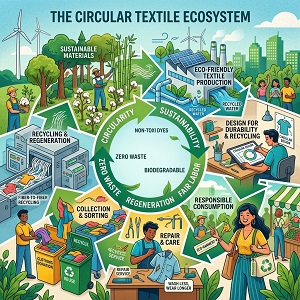

The era when fashion giants could freely incinerate or landfill mountains of unsold inventory is coming to a definitive halt. The European Union has moved forward with decisive new measures under the Ecodesign for Sustainable Products Regulation (ESPR), effectively banning the destruction of unsold clothing, footwear, and accessories. Starting July 19, 2026, large companies across the 27-member bloc must comply with these rules, a move aimed at slashing waste, reducing environmental damage, and leveling the playing field for circular business models.
The destruction of perfectly usable inventory has long been an "open secret" in the fashion world, often sparking public outrage. A notorious example occurred in 2018 when Burberry destroyed nearly £30 million worth of goods to protect its brand exclusivity. The European Commission estimates that between 4% and 9% of all unsold textiles in Europe are destroyed before ever being worn, generating roughly 5.6 million tons of carbon emissions annually—equivalent to the total net emissions of Sweden in 2021.
Jessika Roswall, the EU Commissioner for Environment, stated that while the textile sector is leading the transition to sustainability, the staggering waste statistics reveal an urgent need for legislative action. "The new measures will empower the textile sector to move toward sustainable and circular practices," she noted. Under the new rules, big businesses are required to disclose the volumes of unsold goods they write off and explore alternatives such as resale, donations, or remanufacturing. Medium-sized firms are expected to follow suit by 2030.
However, some experts argue that the ban addresses the symptoms rather than the disease. Muchaneta ten Napel, founder of the fashion policy consultancy Shape Innovate, offered a sharp critique of the industry’s core logic. "Unsold stock is not an accident. It is a business model," she wrote. "I don’t hear 'waste problem,' I hear 'overproduction problem wearing a sustainability costume.'" Critics argue that as long as the "constant churn" of fast fashion remains profitable, the global South will continue to bear the burden of the industry's excess.
Despite the criticism, the regulation is sending immediate shockwaves through the global supply chain. Muhamad Ayyazuddin, Chairman of the Pakistan Readymade Garments Manufacturers and Exporters Association (North Zone), views the 2026 and 2030 deadlines as urgent signals for manufacturers to invest in circular infrastructure. "Brands will be forced to internalize waste costs," he said, predicting that suppliers who offer recycled fibers and traceability will become the preferred partners for European brands.
While the EU allows for specific exceptions—such as health and safety concerns or intellectual property infringements—the message is clear: the days of discarding garments for the sake of profit margins are numbered. As the fashion industry prepares for this regulatory shift, the focus must move from just chasing the next trend to taking full responsibility for every thread produced.