
The Indian government, through its Commerce Department, is rapidly stepping up efforts to prepare national exporters for the European Union's carbon tax regime under the Carbon Border Adjustment Mechanism (CBAM). This proactive step comes as the definitive CBAM regime entered into force in January 2026, followed by the commencement of financial payments in 2027.
Halal certification is expanding beyond the food and beverage sector into Indonesia’s textile and apparel industry. The Head of the Halal Product Assurance Organizing Agency (BPJPH), Ahmad Haikal Hasan, stated that halal critical points in textiles encompass raw materials, additives, processing aids, and the entire manufacturing process. Leather materials used in consumer goods such as bags, belts, wallets, shoes, jackets, watches, and hats require mandatory halal certification.
Bangladesh’s garment and textile sector is facing one of its most severe trials as an acute energy crisis paralyzes a significant portion of manufacturing operations. The worsening shortage of natural gas has not only slowed sewing plant operations but also triggered total disruptions in upstream processes such as fabric dyeing, washing, and drying. Consequently, industry associations estimate that national garment production has plummeted by up to 40 percent, forcing exporters to seek shipment deadline extensions from international buyers.
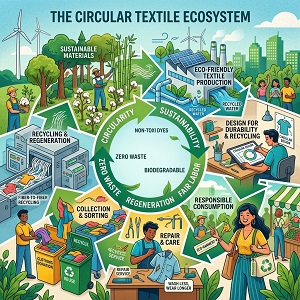
The readymade garment and textile industry in Bangladesh is taking a major step toward modernizing its core sector to become more environmentally friendly and globally competitive. This strategic milestone was officially sealed through the signing of a memorandum of understanding (MoU) on circular economy cooperation between the governments of Bangladesh and Belgium's European counterpart, the Netherlands.
Page 2 of 23