
The Bangladesh Ready-Made Garment (RMG) sector, long the undisputed engine of the nation’s economic miracle, is currently navigating a turbulent and uncertain transition. After a decade of relentless expansion, the industry—which accounts for over 84 percent of the country’s total export earnings—is witnessing a significant contraction. New data from the Export Promotion Bureau reveals a 3.15 percent decline in total merchandise exports for the first eight months of FY26, signaling a potential end to the era of easy growth.
This downturn is the result of a "perfect storm" of external and internal pressures. While weakening demand in North American and European markets has left order books thin, domestic challenges such as skyrocketing energy costs and high financing rates are squeezing the life out of profit margins. Bangladesh’s traditional reliance on low-cost, basic cotton apparel is being tested like never before, as global fashion trends pivot sharply toward high-value, synthetic, and functional textiles—areas where Bangladesh has historically lagged.
While Dhaka struggles to stabilize its output, Vietnam is aggressively seizing the vacuum. Leveraging sophisticated supply chain integration and a web of advantageous free trade agreements, Vietnam’s apparel exports to the United States now eclipse those of Bangladesh by a staggering two-to-one margin. Industry observers point out that Bangladesh’s "volume-first" strategy is proving increasingly vulnerable against Vietnam’s focus on technical prowess and high-tier product segments.
"Vietnam is not simply exporting more garments; they are exporting better, more functional, and significantly higher-value items," noted a recent trade analysis. This competitive divide is becoming even more critical as Bangladesh approaches its graduation from Least Developed Country (LDC) status. The impending loss of duty-free access to major global markets makes the transition toward man-made fiber (MMF) production an urgent necessity rather than a long-term goal.
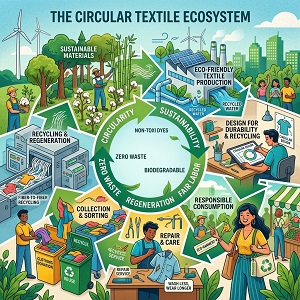
In response to these existential threats, manufacturers are beginning to pivot toward digital production management and AI-powered traceability to satisfy the stringent transparency standards of international buyers. There is also a growing movement to capitalize on the European Union’s mandates for recycled content, with Bangladesh’s burgeoning textile recycling sector offering a rare competitive edge in the green economy.
However, the "innovation gap" remains a formidable hurdle. With rising operational costs leaving little room for error, the coming quarters will be a trial by fire for the industry. The ultimate question remains: can the sector that supports 4.5 million workers evolve from a high-volume supplier into a sophisticated, diversified manufacturing powerhouse, or will it lose its crown to more agile competitors?