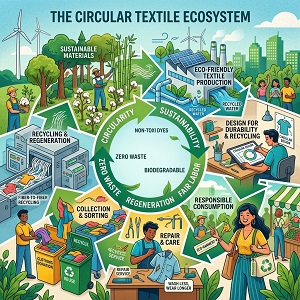

Global apparel brands and textile manufacturers are rapidly reengineering their procurement strategies, pivoting away from traditional commodity fibers toward high-tenacity, circular, and eco-certified materials. This structural realignment is heavily driven by stringent international regulatory frameworks, most notably the European Union’s Ecodesign for Sustainable Products Regulation (ESPR), which enforces strict material traceability and recycled content thresholds across imported textiles.

Scheduled to take place from August 25 to 27, 2026, at the National Exhibition and Convention Center in Shanghai, Yarn Expo Autumn will occupy 27,000 square meters of exhibition space. Jointly organized by Messe Frankfurt (HK) and CCPIT-Tex, this major trade summit serves as a vital barometer for fiber innovation and seasonal procurement budgets across the global textile value chain.
To help procurement decision-makers navigate volatile raw material costs and evolving consumer preferences, the 2026 event features more than 580 international exhibitors categorized across seven specialized product zones: Cashmere, Cotton, Chemical Fiber, Fancy Yarn, Linen, Wool, and the International Yarn Zone. Exhibitor showcases clearly reflect a strong industry shift toward technical functionality and eco-design. For instance, Indonesia’s PT. Indo-Rama Synthetics Tbk is scaling its output of recycled polyester (rPET) staple fibers and specialized filament yarns, while New Zealand’s Woolyarns is highlighting its Perino luxury blends that combine ultra-fine merino wool with specialty fibers. Simultaneously, natural bast fibers are capturing expanded market share, with Egypt’s Sematex For Flax Products expanding international distribution for its linen yarns, and the UK-based Lurex Company leading the high-end decorative sector with certified, recycled metallic yarns.
Furthermore, Yarn Expo Autumn is co-located alongside major industry trade fairs—including Intertextile Shanghai Apparel Fabrics (Autumn Edition), CHIC, and the PH Value Knitting Fair—forming a comprehensive vertical sourcing ecosystem. With China accounting for roughly 40 to 45 percent of worldwide textile exports, this Shanghai gathering provides essential market intelligence for fashion enterprises managing risk, raw material inflation, and global sustainability mandates heading into the 2027 retail year. Through dedicated initiatives like the VIP Business Matching Program, the trade fair successfully connects over 500 international suppliers with more than 22,000 trade buyers, driving global supply chain integration through sustainable, functional, and natural yarn innovations.