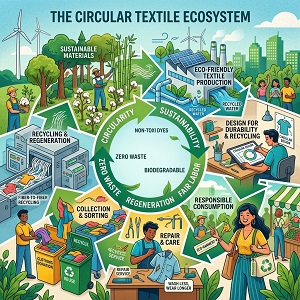

The heavy reliance on imported raw materials and mounting pressures from global climate change are driving the European Union to swiftly pivot toward a self-reliant green economy. At a strategic panel discussion initiated by the Bavarian Industry Association (vbw) in Brussels in mid-May 2026, industry leaders and policymakers gathered to map out the acceleration toward a circular bioeconomy. The dialogue centered primarily on leveraging renewable, bio-based resources to reinforce regional supply chains while maintaining European manufacturing's sharp edge in the global market.
Representing the European textile and apparel sector, Textile ETP President Marina Crnoja-Cosic emphasized that material innovation has become a critical pillar for the future of the fashion and clothing industry. According to her, the development of next-generation bio-based fibers and circular materials is an absolute necessity to decouple manufacturing from fossil fuels and conventional synthetic fibers. "Developing circular fibers from biomass is no longer just an environmental trend; it is a strategic step toward securing domestic supply chains and boosting the competitiveness of European manufacturing amidst global uncertainties," Crnoja-Cosic stated during her presentation.
This innovative push received strong backing from cross-sector panelists, including representatives from the paper, packaging, and biofuels industries. However, businesses cautioned that the ambitious goals of the EU Bioeconomy Strategy will fall short without guaranteed access to sustainably managed domestic raw materials, particularly forest biomass. There is a shared concern that overly prescriptive and rigid regulations could inadvertently stifle the birth of new material innovations on the factory floor.
The forum concluded that the European Union must urgently cut through bureaucratic red tape, clear the path for transparent investment incentives, and accelerate funding support for research and development (R&D). Strong synergy between upstream biomass suppliers and downstream sectors like textiles is viewed as the key to establishing robust lead markets for circular products. Through close collaboration between industry and government moving into the latter half of 2026, Europe remains optimistic about building a resilient, autonomous, and environmentally sound bioeconomy foundation.