
The global fast fashion industry is facing a moment of reckoning as the de facto closure of the Strait of Hormuz sends oil and gas prices skyrocketing. This chokehold on one of the world’s most vital trade routes is creating a domino effect that hits the very core of apparel and footwear production. For retail giants built on the promise of cheap synthetic fibers, the crisis is an existential threat driven by the industry's massive over-reliance on petrochemicals.
Polyester, the dominant material accounting for nearly 60 percent of global fiber production, has seen its costs surge as Brent crude surpasses $100 per barrel. The impact is already visible; Japanese textile leader Teijin Frontier recently implemented an "emergency" price revision, hiking costs for fibers and yarns by up to 20 percent. Similar moves by Eastman and Coats Bangladesh cite "extreme cost escalation" in raw materials and logistics. This has left brands like Shein—which uses polyester in up to 80 percent of its garments—trapped in what experts call a "triple whammy": rising material costs, soaring energy bills, and logistical chaos.
Rachel Kitchin, a senior corporate climate campaigner at Stand.earth, suggests that the fast fashion business model, which operates on razor-thin margins and lightning-fast cycles, is ill-equipped to absorb these shocks. She notes that even shifting to recycled polyester (rPET) offers little protection, as recycling is an energy-intensive process. When energy prices spike, the cost of recycled materials becomes just as volatile. Furthermore, turning to natural fibers like cotton is not a simple fix. Cotton cannot be produced at the scale or speed required by the fast fashion machine, and cotton futures have already hit a two-year high due to the conflict.
The crisis is further compounded by a logistical nightmare. The war has forced shipments to divert around the Cape of Good Hope, adding up to 20 days to transit times and increasing shipping costs by 30 percent. This doesn't just impact price tags; it threatens the livelihoods of factory workers in manufacturing hubs like Bangladesh. Nusa Urbancic, CEO of the Changing Markets Foundation, warns that the disruption in the Strait of Hormuz also affects global fertilizer supplies, such as urea. This threatens the entire cotton supply chain while simultaneously squeezing consumers who are now prioritizing essentials over trendy, disposable clothing.
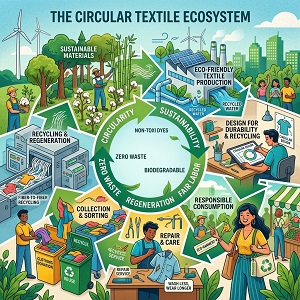
Ultimately, this global shock serves as a loud wake-up call for the fashion industry to undergo a total transformation. Kitchin emphasizes that the industry's dependence on fossil fuels is a fundamental flaw that can no longer be dismissed as a short-term hurdle. The future of fashion must move away from hyper-production and toward renewable energy and circular economic models. If the industry fails to adapt, the turmoil in the Strait of Hormuz may well be remembered as the catalyst that ended the era of ultra-cheap, disposable fashion.