
The latest economic bulletins from Brussels carry a stark and somber warning: Europe is losing its textile industry. The European Apparel and Textile Confederation, known as Euratex, has sounded an urgent alarm, stating that the sector is currently enduring a "continued erosion of competitiveness." This is not a mere statistical fluctuation but a structural collapse affecting a vital industry that supports roughly 1.3 million workers across 200,000 mostly small and medium-sized enterprises.
The reality on the ground is grim, with textile factories closing their doors across the continent every single week. Behind each padlock is a story of lost livelihoods, devastated communities, and the disappearance of specialized industrial capabilities. While the clothing sector experienced a brief, 5 percent revenue bump in 2023, experts now dismiss this as an "inflationary illusion." By 2024 and 2025, real demand evaporated, leading to a sharp decline in manufacturing volumes. Employment in the sector has hit a historic nadir, with workforce losses accelerating to a staggering -4.6 percent in 2025.
Industry leaders describe the current situation as a "perfect storm" triggered by a convergence of hostile factors. Structurally high energy costs in Europe have made local production prohibitively expensive, while sluggish consumer demand has left warehouses full. Simultaneously, European producers are caught in a pincer movement between aggressive import pressure from Asia and unfair competition from global e-commerce giants like Shein and Temu. These platforms often benefit from a 150-euro customs duty exemption, allowing them to flood the market with low-cost goods that frequently bypass the stringent safety and environmental standards imposed on domestic manufacturers.
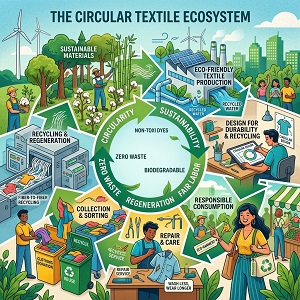
Euratex President Mario Jorge Machado has been vocal about the existential threat facing the bloc. In a recent statement, he warned that if Europe is serious about its manufacturing base, it must act with far greater decisiveness. Machado pointed out a painful irony: as production moves elsewhere, Europe’s dependency on foreign entities increases, and the global carbon footprint grows—the exact opposite of the goals laid out in the EU’s "Green Deal." Without a functioning local industrial base, the 11-billion-euro ambition to build a circular textile recycling economy will likely collapse, as the necessary infrastructure vanishes along with the factories.
While the European Union has proposed several policy responses, including the Industrial Accelerator Act and customs reforms, many in the industry fear the help will arrive too late. A planned "deemed importer" system designed to hold foreign sellers accountable is not set for implementation until 2028, a timeline Euratex deems "too slow" for a sector in freefall. The stakes extend far beyond fashion; the hollowing out of European textiles threatens critical supply chains for the healthcare, defense, and automotive sectors, all of which rely on high-performance materials that only a sophisticated domestic industry can provide. Without immediate intervention to slash energy costs and tighten market surveillance, the "Made in Europe" label in textiles may soon become a relic of the past.