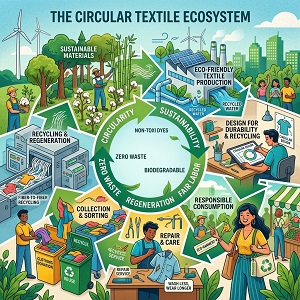

The global fashion industry is beginning to adopt an unconventional strategy by encouraging customers to mend worn clothes instead of continually buying new ones. Amid pressures to reduce environmental pollution and climate change, a number of leading clothing brands are starting to make in-store repair services and sewing workshops a key attraction for young consumers who want to save money while protecting the planet.
Europe is currently rewriting the rules of sustainability for the fashion industry through the most far-reaching set of regulations it has ever faced. However, amidst this grand ambition, barriers to scaling circular textiles continue to persist. This situation occurs not because of a lack of legislation, but due to the absence of the right financial and market conditions on the ground. Consequently, the Global Fashion Agenda has put forward a Call to Action to urge policymakers at both the national and EU levels to study and introduce the necessary incentives to make circularity work in practice.
The global apparel industry is entering a critical redesign phase driven by sustainability goals, tightening regulatory pressures, and resource security centered around a single core principle: material simplicity. For years, consumers were encouraged to look for garments labeled "100% cotton" or "100% polyester" to support recyclability. Today, that label has evolved far beyond a basic sustainability marker, serving as a key indicator of how prepared a brand is for the next era of textile manufacturing.
Page 1 of 10