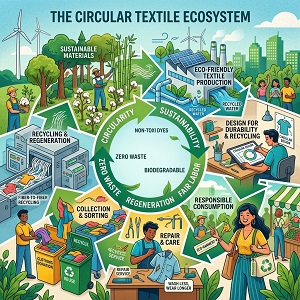

Centuries ago, Europe served as the epicenter of the first Industrial Revolution, reshaping the world through the power of coal and steam. Today, in the second quarter of the 21st century, the continent is reclaiming its destiny as the command center for a new movement: clean textile manufacturing. Amidst the grim reality of industrial pollution, Europe is asserting itself not as the world’s largest producer by volume, but as the master architect of global sustainability standards.
The "ugly truth" of the modern textile sector is impossible to ignore. The industry is responsible for approximately 1.2 billion tonnes of CO₂ emissions annually and consumes a staggering 93 billion cubic meters of water. The dyeing process alone accounts for 20 percent of global industrial water pollution. Pressure to accelerate change is mounting from all fronts—urgent climate targets, tightening regulations, and increasingly conscious consumers. However, what has been missing from the global stage is a leading voice capable of guiding these fragmented voices into a synchronized industrial movement.
Europe is primed to fill this leadership void. Through the European Green Deal, the continent aims to become the world’s first climate-neutral economy. This ambition is anchored by the Ecodesign for Sustainable Products Regulation (ESPR), which mandates that products become more durable, repairable, and eco-friendly. "We are not just worried about compliance; we are creating a dynamic market for cleaner manufacturing technologies," noted a senior EU environmental official during a recent innovation summit.
Europe’s edge lies not just in the pens of policymakers, but in a vibrant innovation ecosystem. The European Innovation Council (EIC), alongside national players like France Deeptech and BioEconomy for Change, continues to fund the R&D of groundbreaking materials. In the private sector, initiatives like The Fashion Pact and the Global Fashion Agenda have spontaneously brought together industry giants to develop collaborative responses to environmental crises.
One of the most transformative shifts is the convergence of chemistry, biology, and Artificial Intelligence (AI) to address issues from the ground up. Innovation in materials and recycling is moving sustainability from a "result to aim for" to an "operational priority." This shift is rewarded by a new generation of consumers who actively investigate the carbon footprint of their purchases. Consequently, eco-friendly processes are no longer an afterthought but a primary selling point for manufacturers and retailers alike.
However, the path to leadership is fraught with challenges. The long-standing issue of offshoring production to countries with cheaper costs and softer regulations remains a hurdle. Yet, Europe’s position as one of the world’s largest consumer markets provides a strategic "carrot and stick." Any retailer wishing to tap into the European economy must comply with strict local standards, such as the REACH guidelines for eliminating harmful chemicals.
"Creating regulation cannot happen in a void; we must enable industrial capacity to scale sustainable innovation," stated an expert from Fashion for Good. The upcoming challenge is transitioning technologies from the exciting startup phase to massive industrial scale. The world is watching to see if Europe can balance economic resilience with environmental responsibility.
Ultimately, the question is no longer whether Europe can lead this eco-friendly overhaul—the process is already in motion. The crucial point is that in a world of finite resources, Europe is proving that industrial competitiveness and sustainability are not mutually exclusive. This revolution is not a trend, but a long-term commitment to ensuring that the next chapter of industrial history does not destroy the world the first one created.