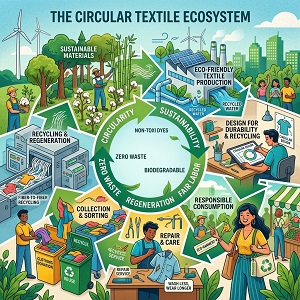

The Chilean government has officially embarked on an ambitious reform of its textile and garment industry by integrating the Digital Product Passport (DPP) system. This policy is a core component of the expanded Extended Producer Responsibility (EPR) framework, which now targets the textile sector as a primary contributor to industrial waste. Under this new mandate, every textile product entering or produced within the Chilean market must be equipped with a digital tracking system. This system provides comprehensive information regarding the product's carbon footprint, raw material origins, and end-of-life recycling guidelines.
This move establishes Chile as the first country in Latin America to adopt transparency standards on par with the European Union. The strategic decision is driven not only by domestic environmental concerns but also by a proactive effort to secure international market access. By aligning local regulations with European standards, Chilean textile exporters ensure their products will not be hindered by increasingly strict "green" trade barriers in the global arena. The system compels companies to conduct deep audits of their entire supply chains, from the cotton fields to the retail racks.
In a statement during the program's launch in Santiago, Chile’s Minister of the Environment emphasized that this policy is the key to a true circular economy. The Minister noted that the Digital Product Passport is not merely a tracking tool but an instrument to fundamentally change consumer and producer behavior. "We are granting consumers the right to know the environmental impact of what they wear, while simultaneously pushing the industry to innovate in using more sustainable materials. Transparency is the new currency in global trade, and Chile is ready to lead the region," the official asserted.
Local industry players have met the policy with optimism, despite acknowledging the initial challenges of investing in digital technology. Chilean retail and manufacturing associations stated that the system would help differentiate high-quality, ethically produced goods from imported "ultra-fast fashion" items that often lack supply chain transparency. Through mid-2026, the Chilean government plans to provide a transition period for small and medium-sized enterprises to integrate QR codes or RFID chips into their garment labels. Chile’s success in implementing the DPP is expected to serve as a blueprint for neighboring nations like Colombia and Peru, which are also beginning to explore similar policies to enhance their global competitiveness.